About
About Donald
I am more interested in the problem than the protocol.
I’m Donald Tsang, a Hong Kong-registered physiotherapist. PT Reg. No. PT204513.
I have treated 5000+ clinical encounter; worked in Hong Kong & Singapore private clinic; and Hong Kong public hospital outpatient setting.
Seeing a large number of patients taught me something early:
- Patients rarely present exactly like a textbook case.
- Two people with the same diagnosis can have very different problems.
- The thing that looks important initially often turns out not to be the main limitation.
So I prefer to start with a strong understanding rather than a rigid treatment plan. I look for the most meaningful bottleneck. We work on it. Then we reassess what has changed — and the next step usually becomes much clearer.
This became the foundation of Equilibrium.
Clinical focus
Where I am putting the work in.
These are the areas I am deliberately building my clinical expertise towards.
- TMD & Orofacial Pain
- Pain & clicking during chewing & mouth opening, toothache, bruxism, ear pain and related head & neck symptoms all sit under the TMD umbrella. However, TMD is complex and multifactorial: there isn't always a straightforward answer to it.TMD Physiotherapy is one part of good multidisciplinary TMD care, focusing on the Musculoskeletal side of TMD: joint, muscle, nerve, breathing pattern, neck and posture.
- Musculoskeletal Rehabilitation
- Persistent pain is rarely solved by finding the tightest muscle or the most painful joint. The important question is what is actually keeping you from moving forward. That may involve movement, strength, load, recovery, behaviour, confidence — or several of these at once. The focus is on finding the most useful place to start.
- Rehabilitation x Strength & Conditioning
- Recovery is not complete when symptoms disappear. It is complete when your body is ready for the life you want to return to.
- Men’s Health
- Men's pelvic health is not just about doing Kegel's. Daily habits, pelvic floor function, posture, movement pattern and breathing matters.
Background
Why work with me?
I’m not trying to give every patient the same answer. I’m looking for what matters most for this person, at this stage, for what they actually want to get back to.
- Hong Kong Registered Physiotherapist — PT Reg. No. PT204513
- 5,000+ musculoskeletal clinical encounters
- Hong Kong public hospital outpatient experience
- Private practice in Hong Kong and Singapore
- Strength & Conditioning coaching and exercise programming
- 40+ published Clinical Case Studies on social media
- The TMJ Clinical Insight Series
- CPD learning experience enhancement project
- Clinical education and learning science
The case studies, the TMJ series are how I show and reflect on my thinking, and how seriously I take developing it.
Explore Clinical InsightsWhere this comes from
Built Through Clinical Experience and Reflection
I am a Hong Kong-registered physiotherapist with experience working in a high-volume public hospital environment. That experience exposed me to a wide range of musculoskeletal presentations and a large number of patient encounters.
More importantly, it taught me that good clinical practice is not simply about knowing more techniques. It is about making decisions when presentations are complex, communicating uncertainty clearly, and continuously reassessing whether what we are doing is actually helping.
Alongside clinical work, I have developed a habit of documenting and reflecting on my cases. I have written more than 40 clinical case studies and reflections covering clinical reasoning, movement analysis, rehabilitation, pain, patient education and communication.
I continue to develop my practice through postgraduate learning, clinical discussion, mentorship and collaboration with other healthcare professionals.
My practice continues to evolve. The standard I aim for remains simple:
Think carefully. Explain clearly. Treat purposefully. Keep learning.
Clinical philosophy
I don’t believe in pretending we know everything on day one.
Rather than
Diagnosis → protocol → treatment
What I work from
Understand the problem → address the bottleneck → reassess what matters next
Real patients rarely present perfectly. The initial assessment gives us useful information, but it also gives us questions. Sometimes the first hypothesis is supported. Sometimes your response tells us we need to think differently. Sometimes improving one problem reveals a limitation that was hidden behind it. That is not poor planning. That is how proper clinical reasoning works in a real human being.
Changing the plan is not evidence that I failed. It shows I am paying attention to what happens now and next.
Clinical practice is a work in progress, mine included. If your response doesn’t match what I expected, the honest move is to reconsider, not to defend the original plan.
Explore Clinical InsightsBeyond the consultation
Your rehabilitation should not stop at the clinic door.
A patient may spend 45–60 minutes with me. They spend the rest of the week living, working, training, sleeping and responding to their symptoms. That is where rehabilitation actually happens.
The consultation is one part of rehabilitation. What happens in the days between consultations is the other huge part. The Pocket Exercise Log exists to connect the two.
The usual prescription sounds like this: “Do these three exercises, three sets of ten, once a day.” A week later:
- Did they actually do them?
- Did the exercises feel appropriate?
- Did symptoms change?
- Were they too easy — or too hard?
- Did their training load change?
- What should progress next?
The problem is not necessarily motivation. Sometimes the rehabilitation system itself stops at the clinic door.
That is why I built the Pocket Exercise Log, as a bridge between consultations. The plan travels with you: you can see what you are working on, remember what matters, record your work, understand your progression, and send back feedback that genuinely informs the next decision.
The feedback loop
- What we decided
- What you actually did
- How you responded
- What we learn
- What changes next
If I believe the plan should change when your response changes, then I need to know what happens between consultations. That is why rehabilitation here is not “here are your exercises, see you next week.”
Your physiotherapy does not disappear when the consultation ends.
The symbol
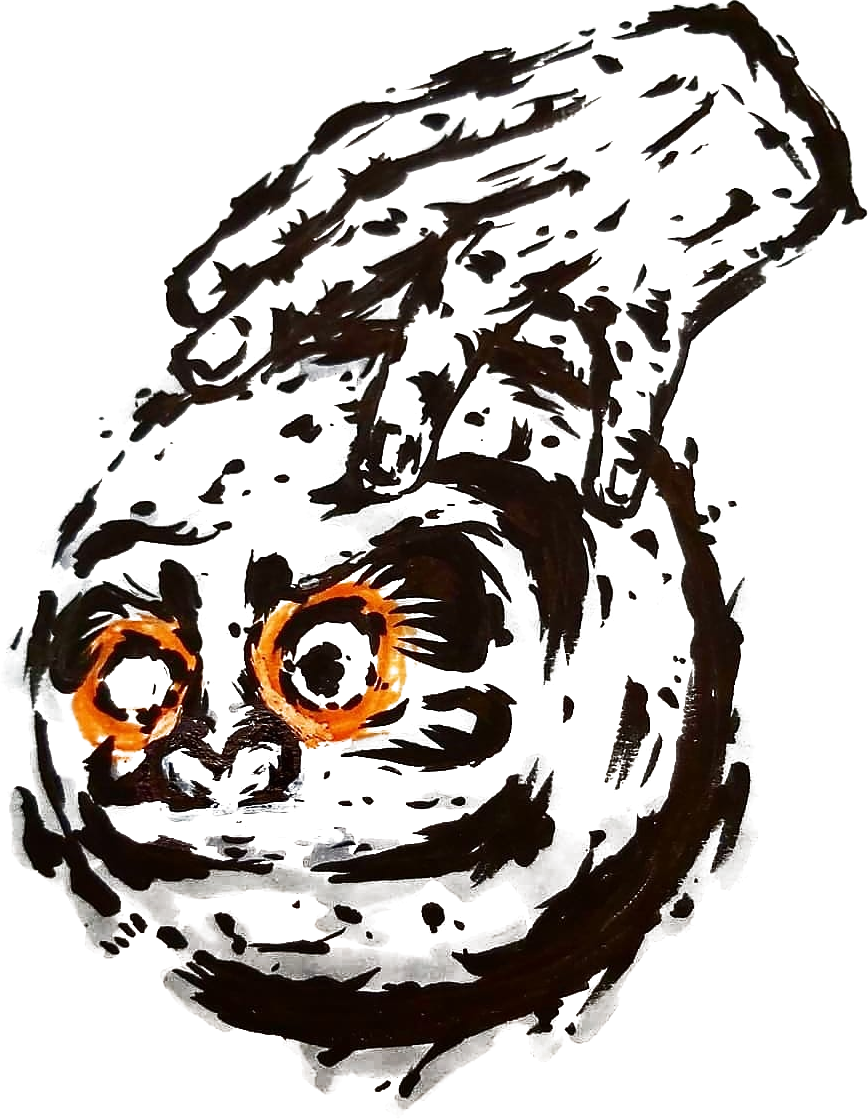
Why a tumbler figure?
- 01 · Resilience & adaptability
- A tumbler loses its balance — and resets. The body is not a machine that simply needs to be returned to its original position. It adapts, it responds, it changes. And it can rebuild resilience.
- 02 · The unfulfilled wish
- The single unfinished eye represents what the patient arrives with: pain that has not been resolved, something they cannot do, a quality of life they want back. Completing the eye is reaching that outcome.
- 03 · Guided recalibration
- The hand above the figure is the clinician’s role — not to force the body into a predetermined position, but to guide and facilitate while you rebuild your own capacity.
- 04 · A body in motion
- The hand-painted ink-wash style reflects the nature of the body itself. The body is not static. It changes with symptoms, load, environment, behaviour, training and recovery. My job is not to force it back into a fixed state, but to help it adapt and rebuild resilience.